Producer, bass player, string and horn arranger for Diali Cissokho & Kaira Ba‘s Routes (2018)
This album builds a bridge across the Atlantic, connecting worlds thousands of miles apart but intimately bound by a shared history. Over the course of two years, we recorded Routes in North Carolina, USA, and in M’bour, Senegal. The collaboration grew to include 35 musicians, each of whom listened deeply to the others in this musical conversation. Sounds of Senegal intertwined with those of the U.S. South – musicians calling back and forth across continents, drawing each other close though an ocean away.
We hope the sonic world of this recording may offer you a glimpse into the deep and meaningful relationships we’ve forged through nearly a decade of collaboration. As musicians we work to hear each other’s truths and the resonance of shared and differing perspectives. Our dream is that this music contributes to a world that transgresses borders, a world wherein people are free to move as they please, to find fellowship, and to be at home. To those who fight for peace, love, equity, justice and liberation – we dedicate this album to you.
Songlines Magazine:
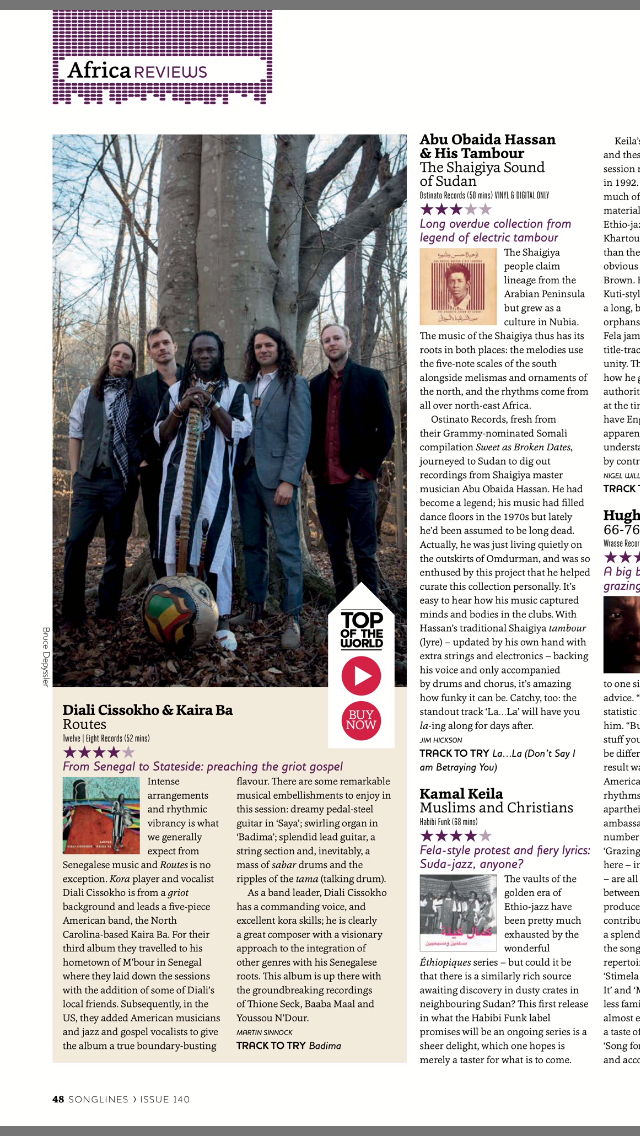
“As a band leader, Diali Cissokho has a commanding voice, and excellent kora skills; he is clearly a great composer with a visionary approach to the integration of other genres with his Senegalese roots. This album is up there with the groundbreaking recordings of Thione Seck, Baaba Maal and Youssou N’Dour.”
Robert Christgau for Noisy/ Vice:
Routes is “a genuinely and often beautifully syncretic evocation of a double identity that would be hard to match and impossible to duplicate.”
Afropop Worldwide:
Routes is “in its essence Senegalese but with a universality that translates beautifully across cultures,”
http://afropop.org/articles/routes
Black Grooves:
“Routes is the perfect showcase for Kaira Ba’s unique fusion of Senegalese and American musical traditions, as well as a demonstration of cross-cultural collaboration and mutual respect between band members who welcomed an immigrant to their community.”
http://blackgrooves.org/diali-cissokho-kaira-ba-routes/
Songlines Magazine Top of the World
Liner Notes
Alla L’a Ke
One of the most widely-played pieces in the traditional kora repertoire, Alla L’a Ke has a deep history among the Mande ethnic groups. It’s often the first piece taught to young kora students. My late father, Ibrahima Cissokho, taught me this song is like school for a kora player. It teaches the alphabet of the kora and how to speak its language. When I hear this song I think about my father, who often said, “This is the number one song! Keep it close.” In this version of Alla L’a Ke, I sing about my profound disbelief when he passed away. When he died I was so surprised, but I realized I had to accept it. L’homme propose, Dieu dispose, as they say: No matter what a person wants, it’s God who decides what happens.
A person can choose / but God’s decision is everything / nobody can undo it / my father has passed away / it can’t be taken back / God, you have surprised me / I didn’t know you could do this to me / but Father, I’m back / I’m back playing Alla L’a Ke for you / come back! / I’m singing to the Cissokhos / everybody clap your hands / today is gonna be a beautiful day
Diali Keba Cissokho – Kora, Lead Vocals | John Westmoreland – Electric Guitar | Jonathan Henderson – Bass | Austin McCall – Drum Kit | Will Ridenour – Djembe | Alan Thompson – Alto Saxophone | Ablaye Daffé, Ablaye Cissokho, Mamadou Cissokho, Abdou Ndiaye, Bayemor Mbaye – Soruba, Sabar | Yaye Boye, Yande, Ndai Mbaye – Vocals | Jennifer Curtis – 1st Violin | Elizabeth Phelps – 2nd Violin | Suzanne Rousso – Viola | Paula Peroutka – Cello | Jonathan Henderson – String Arrangement | Jason Richmond – North Carolina Cicadas and M’Bour Fish Market Field Recordings
Badima
The Mandinka word badima means family or relatives, and in this song I speak to the way music can bring about radical change. It was born from a beautiful but difficult moment at my family’s house in M’Bour, Senegal. One year when I traveled home, I surprised all my relatives by showing up unannounced, but when I opened the door, everyone was arguing. I couldn’t get them to calm down, so I went to my father’s old room and grabbed his kora. I stood in the middle of the courtyard, and my fingers began playing the Badima melody. Everyone stopped what they were doing and gathered around. I remember I was crying and singing at the same time. After that, we all came together and everyone was laughing! Music did that; it’s a powerful medicine to change things for the better.
My beautiful family / I’m talking to you / listen to this / arguing is not good / I didn’t choose you to be my family, but we are / we have the same blood / God has decided this / so let’s stop yelling and come together
Diali Keba Cissokho – Kora, Lead Vocals | John Westmoreland – Acoustic & Electric Guitar | Jonathan Henderson – Bass | Austin McCall – Drum Kit | Will Ridenour – Sabar | Chuckey Robinson – Organ | Ablaye Daffé, Ablaye Cissokho, Mamadou Cissokho, Abdou Ndiaye, Bayemor Mbaye – Soruba, Sabar | Yaye Boye, Yande, Ndai Mbaye – Vocals | Jason Richmond – M’Bour Fish Market and Saly Traffic Field Recordings
Salsa Xalel
Xalel means child in Wolof. This song asks what kind of world are we leaving for our children? What are they going to inherit from us? Are they softly singing us a song that we need to listen out for? They will soon be the musicians, the teachers, the presidents of this world. How can we show them the right way to live? As for the music, my father always loved to sing and dance the salsa, and that always influenced me. In Senegal, we blend classic salsa with the most popular national dance music, mbalax, using local percussion instruments, koras, balafons, flutes, and traditional singing styles.
Our children are the future / we need to show them the right direction / there will be a day when we are no longer here / their feet will soon be where our feet were / each child is precious / we are not allowed to abandon them
In the distance hear them calling Bamba / children of the coming rising sun / what will be the world they meet tomorrow / if we don’t make the peace before they come? / In the distance hear them singing Bamba / voices of the day that’s yet to be / melodies are made of love and sorrow / let the music wash your spirit free
Diali Keba Cissokho – Lead Vocals | John Westmoreland – Electric Guitar, Charango | Jonathan Henderson – Bass | Austin McCall – Drum Kit | Will Ridenour, Sidya Cissokho, Ablaye Daffé, Ablaye Cissokho, Mamadou Cissokho, Abdou Ndiaye, Bayemor Mbaye – Sabar | Sunkare Kouyate – Balafon | Ibrahima Sene – Tama | Tamisha Waden, Shana Tucker – Vocals | Lynn Grissett – Trumpet | Andy Kleindienst – Trombone | John Westmoreland – Horn Arrangement, English Lyrics | Will Ridenour – M’Bour Horse Cart Field Recording
Saya
In Saya I tell the story of grasping the reality of death through the experience of losing my mother, MossuKeba Diebate. I wrote this song on the day we buried her. I couldn’t believe we put her in the ground, covered with sand. When my family was walking slowly away from the cemetery, I stopped and turned my head back. That was the moment the melody for Saya came into my mind. We continued straight home, and suddenly I had the urge to play kora. I borrowed my uncle’s kora, and began to sing this song. It was burning to get out. My family came and gathered around me as I played. We were all able to express our emotions in that moment, listening together and remembering my mom.
No matter what, death is unavoidable / in this world we live in / this is the reality / now I believe it / now I know what it means / I’m singing to the Diebates / my Mom, she has passed / let’s be sad and cry / this is all we can do / my Mom, she will never be forgotten
Diali Keba Cissokho – Kora, Lead Vocals | John Westmoreland – Electric Guitar | Jonathan Henderson – Bass VI | Austin McCall – Shekere | Will Ridenour – Dunduns, Percussion | Eric Heywood – Pedal Steel Guitar | Yaye Boye – Vocals
Ma Cherie
Ma Cherie was written over a long period of time, and mixes together different stories of relationships and people’s experiences of love. Being in love can be hard; it can feel like both a sickness and the cure for itself. When you say “I love you” to someone, what are you actually saying? To me, it is saying that there is something profound inside you that I love, and I want to be a part of it. It’s not something about you, like intelligence or beauty. It’s something hard to describe that lives much deeper inside.
Nobody can be sure about love / it’s so hard to believe / love can make you so sick / you can no longer taste food / meaning is lost / but it’s worth the risk / my love, you are inside my heart / when I see you, I’m happy / if I don’t see you, I cry, cry, cry / I’m gonna be patient with you / no matter what you believe / I’m gonna make you happy, happy, happy
Fire burns the forest, leaves the trees / my heart flames with sickness and with greed / but it’s love that brings me to my knees / Ma Cherie, you set me free
Diali Keba Cissokho – Lead Vocals | John Westmoreland – Electric Guitar | Jonathan Henderson – Bass | Austin McCall – Drum Kit | Yaye Boye – Lead Vocals (first verse) | Shana Tucker – Lead Vocals (second verse) | Ibrahima Sene – Tama | Ablaye Daffé, Ablaye Cissokho, Mamadou Cissokho, Abdou Ndiaye, Bayemor Mbaye – Soruba, Sabar | Jennifer Curtis – 1st Violin | Elizabeth Phelps – 2nd Violin | Suzanne Rousso – Viola | Paula Peroutka – Cello | Jonathan Henderson – String Arrangement, English Lyrics
Baayi Leen
This song talks about how judging people without knowing their story is wrong. In 2010, I fell in love and immigrated from Senegal to the U.S. to be with my wife. I had no idea how this would affect my family back home, but they supported me. On visits back to Senegal, I started to notice that some friends were treating me different. The distance of our lives had translated to distance within our relationships. They were judging me and my life in the U.S., without even talking to me or knowing what’s going on in my life, my struggles, my successes. They didn’t understand how firmly I guard my culture, because it means the world to me. After they took the time to sit and talk to me, they realized it was wrong to judge. It’s so easy, but it can be a powerfully divisive force.
Judging people you don’t know is wrong / it’s a hurtful thing to do / God doesn’t like when a person looks down on another / when you say beautiful things about another, you will sleep well / today I’m singing so you will know this / so you can consider not judging other people / because you don’t know their story
Diali Keba Cissokho – Kora, Lead Vocals | John Westmoreland – Electric Guitar | Jonathan Henderson – Bass | Austin McCall – Drum Kit | Will Ridenour – Congas, Karinyan | Yaye Boye, Tamisha Waden, Shana Tucker – Vocals | Beverly Botsford – Shekere, Sound Colors
Ndoli
Ndoli is a mythical character in Mandinka folklore; he appears when summoned and proceeds to tickle children. It’s a children’s song and game, kind of like a combination of the “Patty Cake” body percussion song, and a more playful version of the “Bogeyman” stories in the U.S. For generations, parents have been singing versions of this song to their children when they are acting up or feel sad and need some excitement. My mom sang this to me growing up, and now I sing it to my son, Ablaye.
Ndoli has a deep history / every generation has kept it / our children are gonna see Ndoli next / Saturday is play day / there’s no school / let’s play outside while our parents watch / if you find what I hide, you’ll get a baby chicken! / Ndoli is coming!
Diali Keba Cissokho – Kora, Lead Vocals | John Westmoreland – Acoustic Guitar, Vocals | Jonathan Henderson – Bass, Vocals | Austin McCall – Calabash, Percussion, Vocals | Will Ridenour – Djembe, Congas, Vocals | Tony Williamson – Mandolin
Story Song
John composed the instrumental to this song in the desert blues style of northern Mali. The band tracked it live in the studio as an instrumental, but when we were listening to the playback, I felt moved to offer an oration in the control room. They asked me to go into the studio and record my thoughts about how we have collaborated together over these past seven years.
Listen to these instruments, can you hear them? / do you hear this melody, this music, this voice / all that comes from our hearts / it’s true / listen to this music today / these people I’m playing music with / we’re not the same culture / we’re not the same religion / but our heart is the same / I believe that / the way you are, the way you believe…keep it / but don’t judge other people for what they believe / you can’t play music like this if your heart is not beautiful
Diali Keba Cissokho – Lead Vocals | John Westmoreland – Electric Guitar | Jonathan Henderson – Bass | Austin McCall – Drum Kit | Chuckey Robinson – Organ | Tamisha Waden, Shana Tucker – Vocals | Ibrahima Sene – Tama
Xarit
This song was composed by my older brother, Youssoupha Cissokho. The Wolof word xarit means friend,and Youssoupha wrote this song to celebrate the power of strong friendships. This rang true to him one day after moving away from his neighborhood. Suddenly he was in a foreign place, by himself, and knew nobody; everything felt uncomfortable. When Youssoupha sings this song at home, people stop whatever they are doing, and they come to sing the choruses at the top of their lungs to celebrate being together. During the verses, he sings the names of some of his childhood friends, so in this adaptation I sing for some of mine.
Oh how I miss my friends / we were born together / we played together / we grew up together / this was such a long time ago / I’ll never forget it / I remember it like it was yesterday / true friends are everything
Diali Keba Cissokho – Kora, Lead Vocals | Tony Williamson – Mandolin | John Westmoreland, Jonathan Henderson, Austin McCall, Will Ridenour – Vocals
Naamusoo
Among the older generations of Mandinka, giving a woman the nickname Naamusoo is a sign of great respect. It’s like calling them ‘Mom.’ It used to be that women were not called by their name right away. Instead, this sign of respect was used first. Sadly, this part of Mandinka culture is fading away, so we call this song Naamusoo to keep that tradition alive. In the lyrics I tell the true story of Salimata, a beautiful woman from Casamance who thought herself too good for anyone to marry. She died alone, 22 years young, with nobody to bury her, not even her father or brothers. I contrast her story with that of my Mom, who I call Naamusoo.
Salimata was so beautiful / nobody could even look at her / but she died without a husband / it was her choice / she never took any suitor seriously / she always refused them / she took advantage of each man who loved her / Salimata, you died alone / it’s a bad idea to act this way / don’t see yourself as too good for anyone to love you / women of today, please, don’t act like this / look at the example of my mom / she was beautiful and she made the choice to marry / today I am here because of her / women of today, please, a marriage proposal is a big deal / it means we can live together, and we can die together
Diali Keba Cissokho – Kora, Lead Vocals | John Westmoreland – Electric Guitar | Jonathan Henderson – Bass, Marimba, Dundun | Austin McCall – Drum Kit | Will Ridenour – Djembe, Sabar | Jennifer Curtis – Violin Solo, 1st Violin | Ibrahima Sene – Tama | Lynn Grissett – Trumpet | Andy Kleindienst – Trombone | Jim Henderson – Baritone Saxophone | Ablaye Daffé, Ablaye Cissokho, Mamadou Cissokho, Abdou Ndiaye, Bayemor Mbaye – Soruba, Sabar | Yaye Boye – Backing Vocals | Elizabeth Phelps – 2nd Violin | Suzanne Rousso – Viola | Paula Peroutka – Cello | Jonathan Henderson – String Arrangement, Horn Arrangement
Night in M’Bour
In this collage of sounds from my hometown of M’Bour, we first hear a traditional sabar drum ensemble playing in a courtyard, mixed with fula flute, a side-blown, 3-holed flute made from rattan. Then we hear in the distance faint percussion music from a wedding, which gives way to the chanting of the Koran by kids known as “talibe.” These are young kids without a family who live with their Serigne, or teacher. During the day they beg in the streets, and at night they begin chanting after dinner and continue non-stop until 6 o’clock in the morning. After the talibe, we hear the late-night sounds of the courtyard at my brother Youssoupha’s house—people hanging out, brewing tea, cleaning the dishes from dinner, and playing kora. The final song, written and performed by my nephew Mamadou Cissokho, quite possibly saved his parents’ marriage. He calls it Waajur, parents in Wolof.
My Mom, my Dad / I appreciate you so much / I miss seeing you together, laughing, eating, hanging out / I hope you can continue that / I love you and respect you / when I grow up, I want you both to be a part of my life / to see who I will become / to be proud of me / so you don’t regret bringing me into your lives / Dad, you are a wonderful musician / you have always paid great attention to your kids / you feed us, support us / you have always wanted a better life for your kids
Baba Galle Kante – Fula Flute | Ablaye Daffé, Ablaye Cissokho, Abdou Ndiaye, Bayemor Mbaye – Sabar | Mamadou Cissokho – Sabar, Acoustic Guitar, Lead Vocals | Jason Richmond – Courtyard, Talibe, M’Bour Night and DialiKunda Field Recordings | Jonathan Henderson – Waajur Field Recording
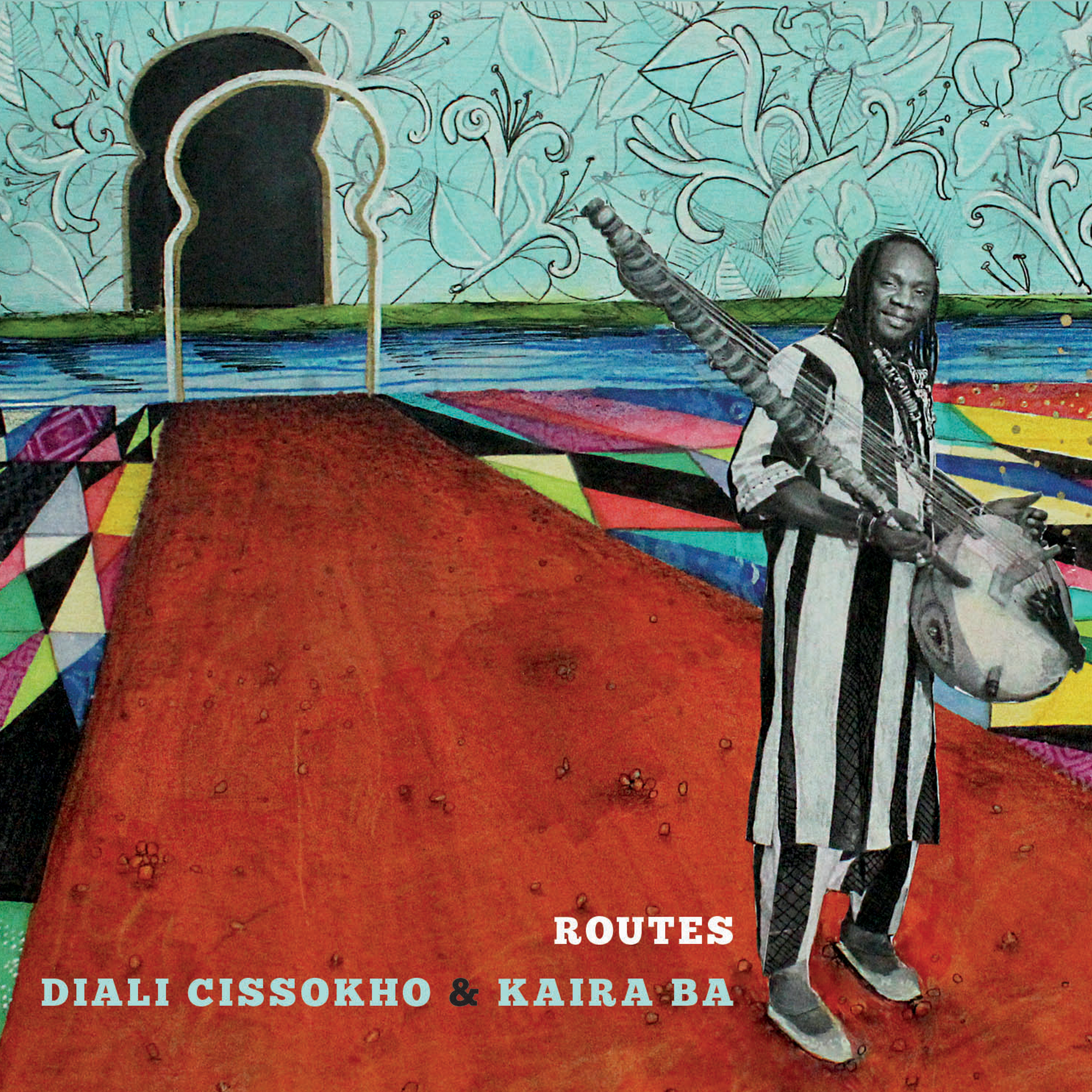
 Jonathan Henderson