Anechoia Memoriam
A participatory installation by Mark Dixon and Jonathan Henderson
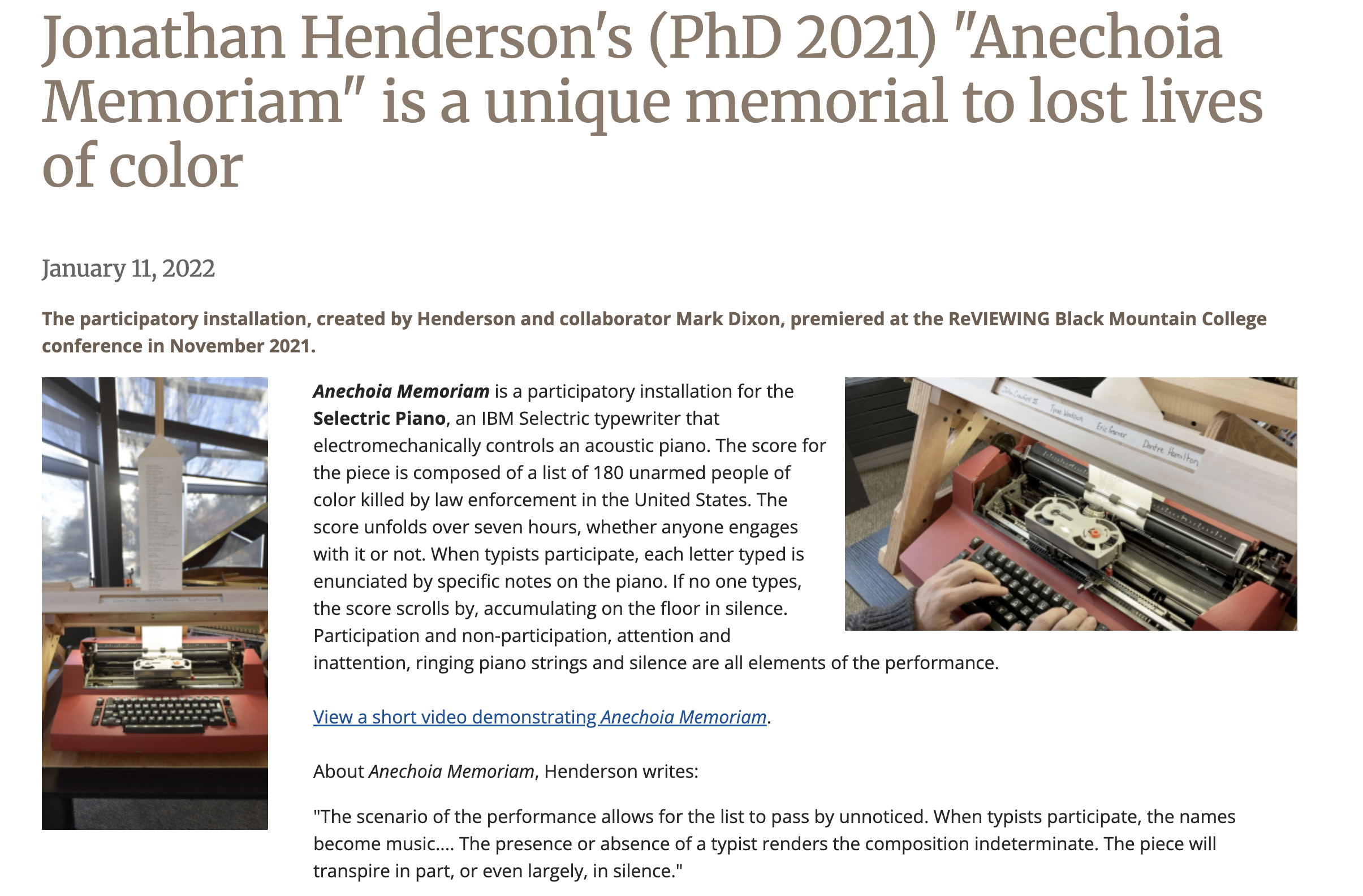
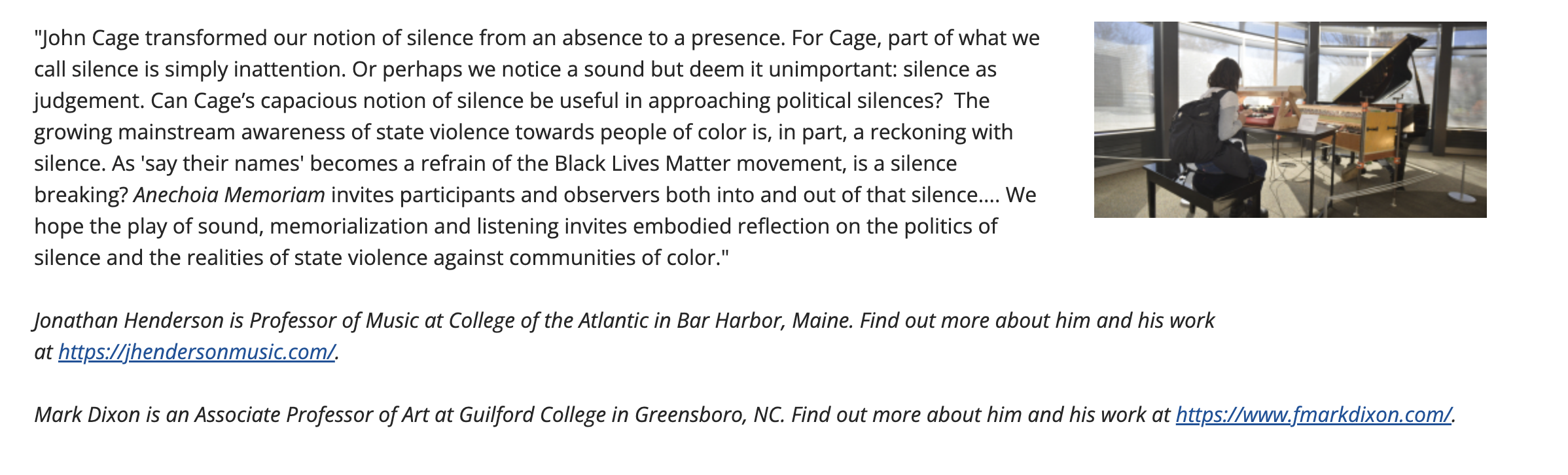
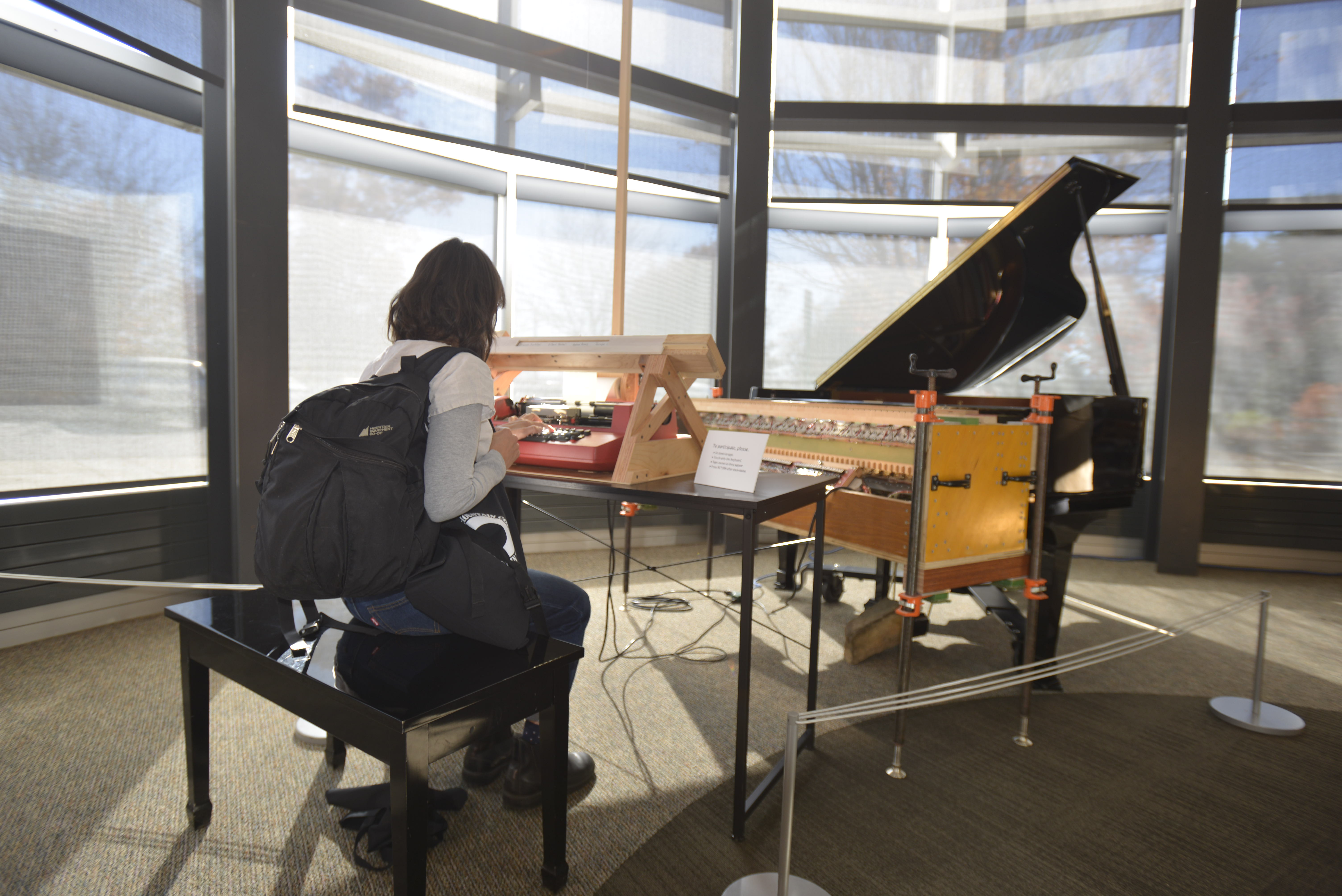
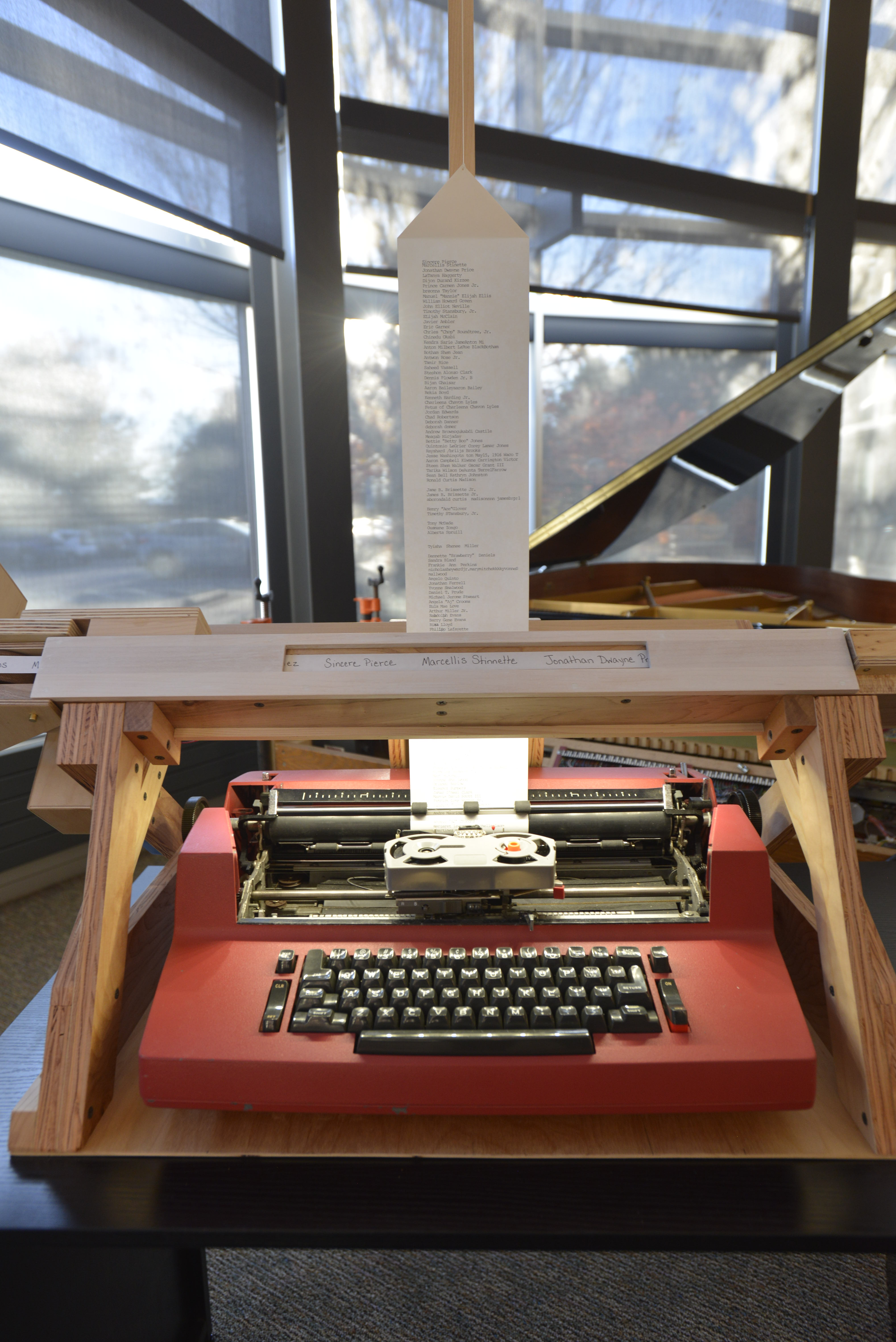
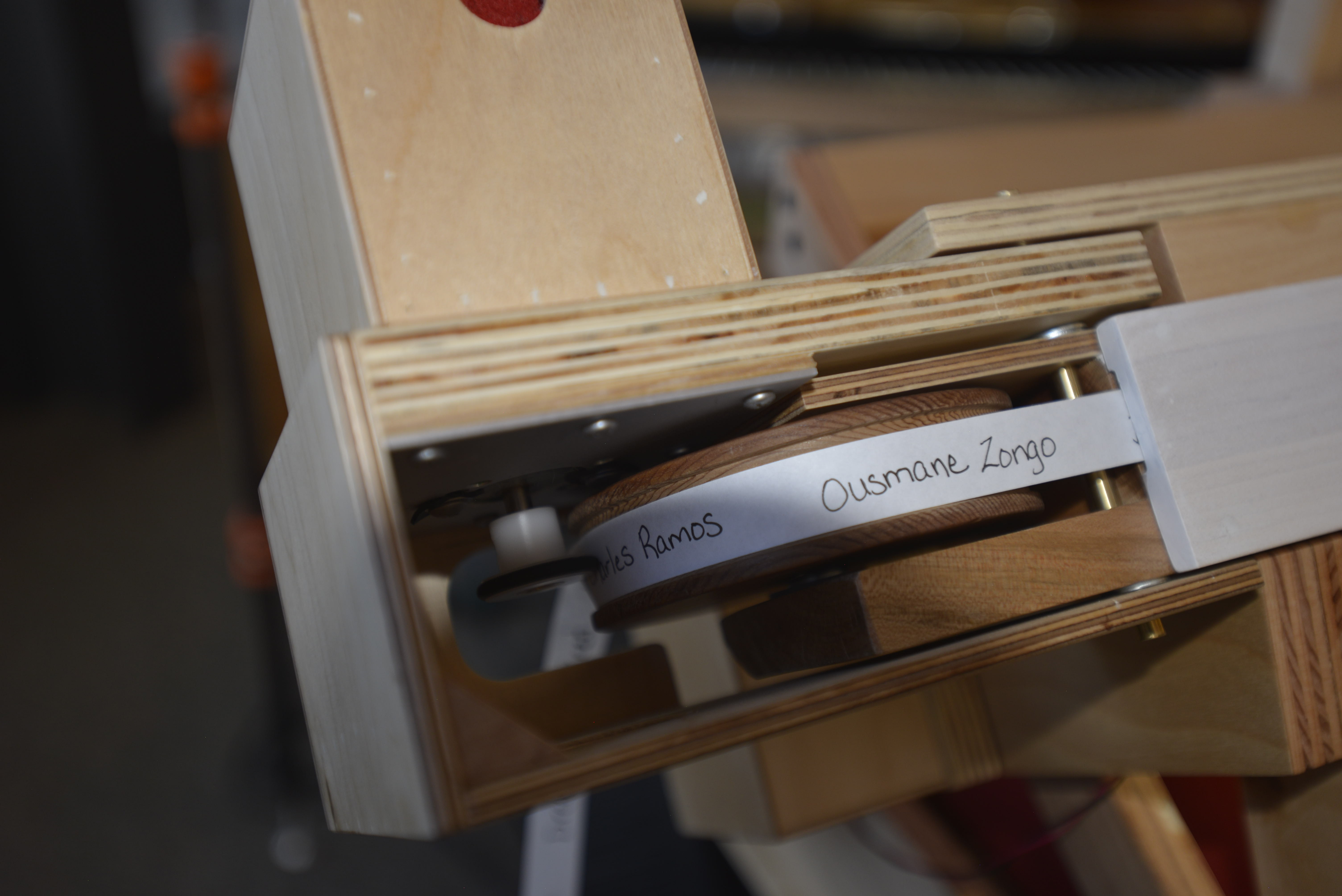
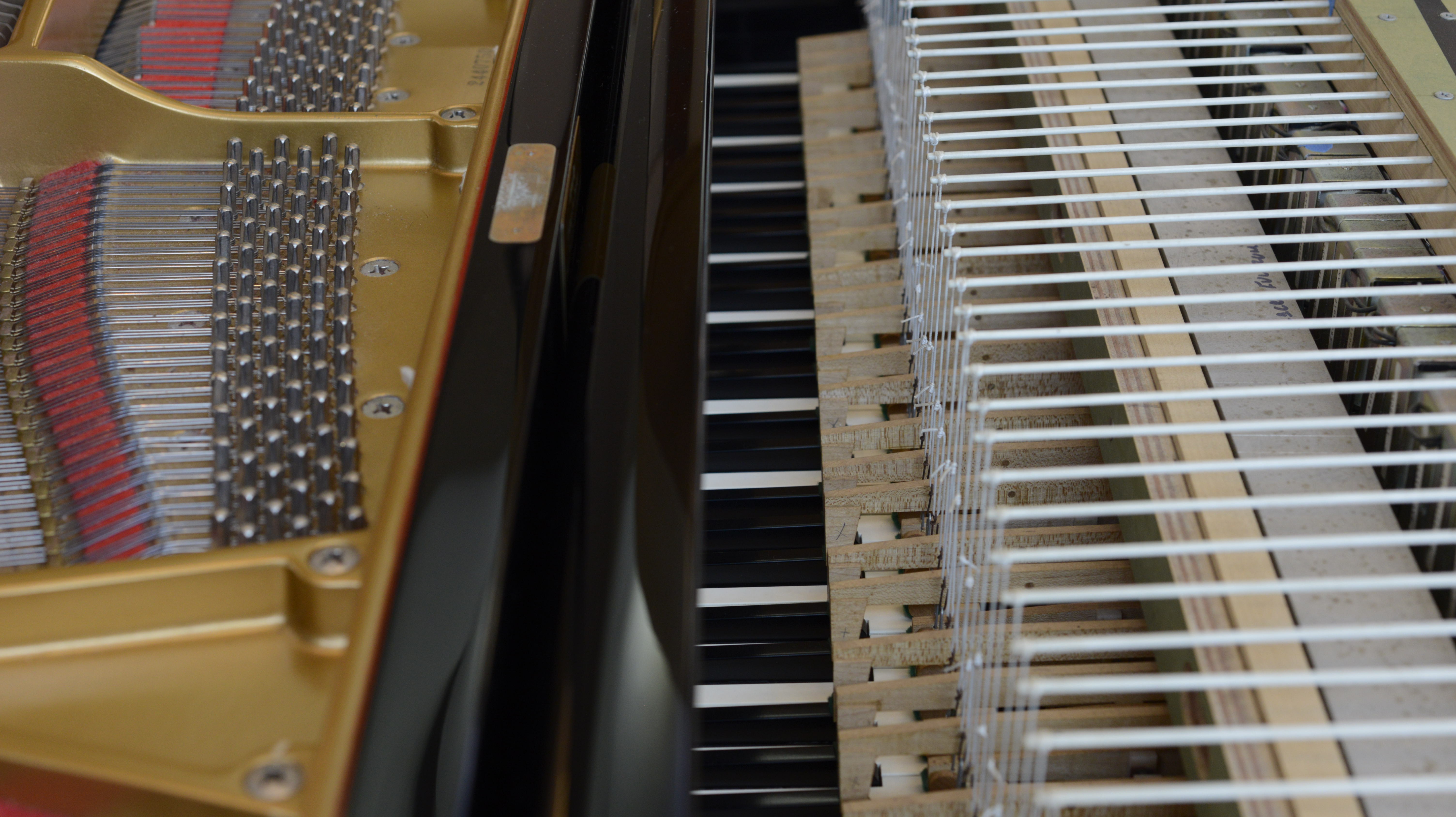
A typist’s chair sits empty in front of a red IBM Selectric typewriter. The machine is linked through a nest of wires, circuits, and levers to an acoustic piano. A sign invites passing observers to take a seat in front of the typewriter and perform from a score scrolling by slowly on ticker tape. Typing actuates notes on the piano. If no one types, the score scrolls by, accumulating on the floor in silence.
The score for Anechoia Memoriam is composed of a list of 180 unarmed people of color killed by law enforcement in the United States. The scenario of the performance allows for the list to pass by unnoticed. When typists participate, the names become music. Each letter typed will be enunciated by specific notes on the piano. The presence or absence of a typist renders the composition indeterminate. The piece will transpire in part, or even largely, in silence.
John Cage transformed our notion of silence from an absence to a presence. For Cage, part of what we call silence is simply inattention. Or perhaps we notice a sound but deem it unimportant: silence as judgement. Can Cage’s capacious notion of silence be useful in approaching political silences? The growing mainstream awareness of state violence towards people of color is, in part, a reckoning with silence. As “say their names” becomes a refrain of the Black Lives Matter movement, is a silence breaking? Anechoia Memoriam invites participants and observers both into and out of that silence. Participation and non-participation, attention and inattention, ringing piano strings and silence are all elements of the performance. We hope the play of sound, memorialization and listening invites embodied reflection on the politics of silence and the realities of state violence against communities of color.
Anechoia Memoriam
“Say their names.”
This invocation is a principal refrain of the Black Lives Matter movement. It is a call to interrupt silence and direct our attention towards the lives of those killed by law enforcement.
Anechoia Memoriam is a response to this call. The score for the piece is composed of a list of 180 unarmed people of color killed by law enforcement in the United States.
The score will scroll by on ticker tape over the course of six hours. You are welcome to transcribe the names onto the typewriter. As you do, each letter will sound notes on the piano. The piece will proceed in and out of silence depending on participation.
John Cage proposed that what we call silence is often inattention. Or we may notice a sound but deem it unimportant: silence as judgement. As far as we know, Cage’s thinking about silence did not extend to explicitly political silences like the ones we engage here. Nevertheless, we are in debt to Cage for our consideration of participation and non-participation, attention and inattention, and the conscious inclusion of silence. We intend the indeterminate play of sound, silence, and attention as a memorial. We hope it will prompt reflection on the personal and political silences surrounding state violence against communities of color.
We all have roles to play in the vibrant struggles for collective liberation that people of color have led over the course of American history. Perhaps an experience of art, attention, or silence-breaking can encourage us down that path.
About the Names
An uncountable number of people have been lost to white racial violence in the United States. Based on the limits of available information alone, any list of this kind will be incomplete. The 180 names we included are drawn from recent decades. We chose to focus on state-sanctioned killing of unarmed people because it is a particularly egregious manifestation of racial violence. However, that decision created significant silences within the score.
Absent, for instance, are Trayvon Martin and Ahmaud Arbery, two young men killed by vigilantes who imagined they were doing the work of law enforcement. Absent also are those killed at the Emanuel AME Church in Charleston in 2015, along with countless other victims of non-state white terrorism.
Our list also omits innumerable American lives lost to systemic racist inequities in health care; food access; education; the system of courts, jails and prisons; housing; etc. The more focused our score became, the more important it became to frame our choices within the much larger context of racial violence in the US.
We Welcome Your Feedback
Anechoia Memoriam is a work in process being performed for the first time at ReVIEWING 12. As we created the piece, we encountered many sticky questions. We chose to proceed out of silence despite what is difficult and unresolved. We want to learn from your experiences of the work. Please share your thoughts in the notebook here, in conversation with us, and/or online by scanning this QR code.
The Artists
Mark Dixon makes objects, performances, videos and sounds. He cofounded the intermedia ensemble called Invisible in 2007, performing in contexts ranging from punk house basements, to the Telfair Museum, to UNCG’s New Music Festival and Moogfest. Mark has an MFA in Studio Art from Carnegie Mellon University and is associate professor at Guilford College where he chairs the Art and Experience Design Programs. A range of his work is available at fmarkdixon.com
Jonathan Henderson shapes words and sounds into ideas and tries to teach about them. He has produced recordings in the US and Senegal, created music and sound art for film, theater, and art installations, and regularly performs on the street and stage. He is a co-founder of the transatlantic collaboration Diali Cissokho & Kaira Ba, the intermedia ensemble Invisible, and the radical marching band Cakalak Thunder. Jonathan is a Ph.D. Candidate in Music at Duke University and incoming Professor of Music at College of the Atlantic in Bar Harbor, Maine. More at: jhendersonmusic.com
Contact: henderson.jonathan@gmail.com, fmarkdixon@gmail.com
 Jonathan Henderson